
Bathroom Installation Step by Step, From Survey to Sign-Off
A bathroom installation looks like chaos from the landing and like a plan from the trade side. The room is stripped, the pipes are moved, the walls are made good, and then it all goes back together in a set order. This guide walks through that order, so you know what the person in your hallway is doing and why the water might be off on day two.
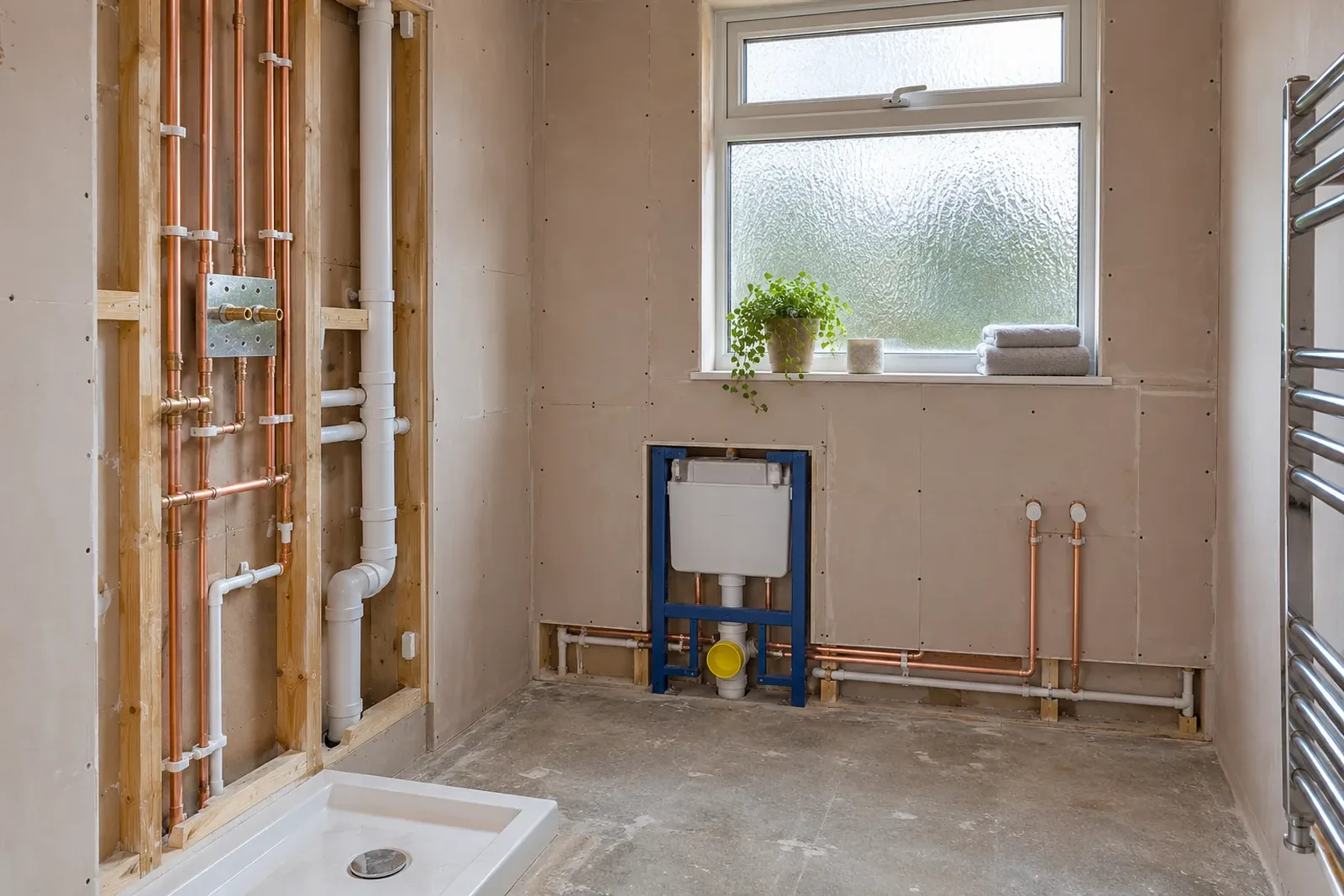
Before anyone arrives: the survey
Everything starts with a survey of the room. A good installer measures the walls, checks where the soil pipe, the water supply and the electrics enter the room, and looks at the floor and the ceiling below. They will ask how many people use the bathroom, whether anyone struggles with a high bath edge, and what annoys you about the room you have now.
In a Scottish tenement or flat this visit also covers the building around you. Older tenement buildings often have shared lead pipework feeding the bathrooms above and below you. If your pipes tie into something shared, find out at the survey and not halfway through the job.
Ask for the quote in writing, with the work listed line by line. If you are comparing prices, our guide on what affects bathroom installation costs in Scotland explains why two quotes for the same room can look so different.
Choosing and ordering before the work starts
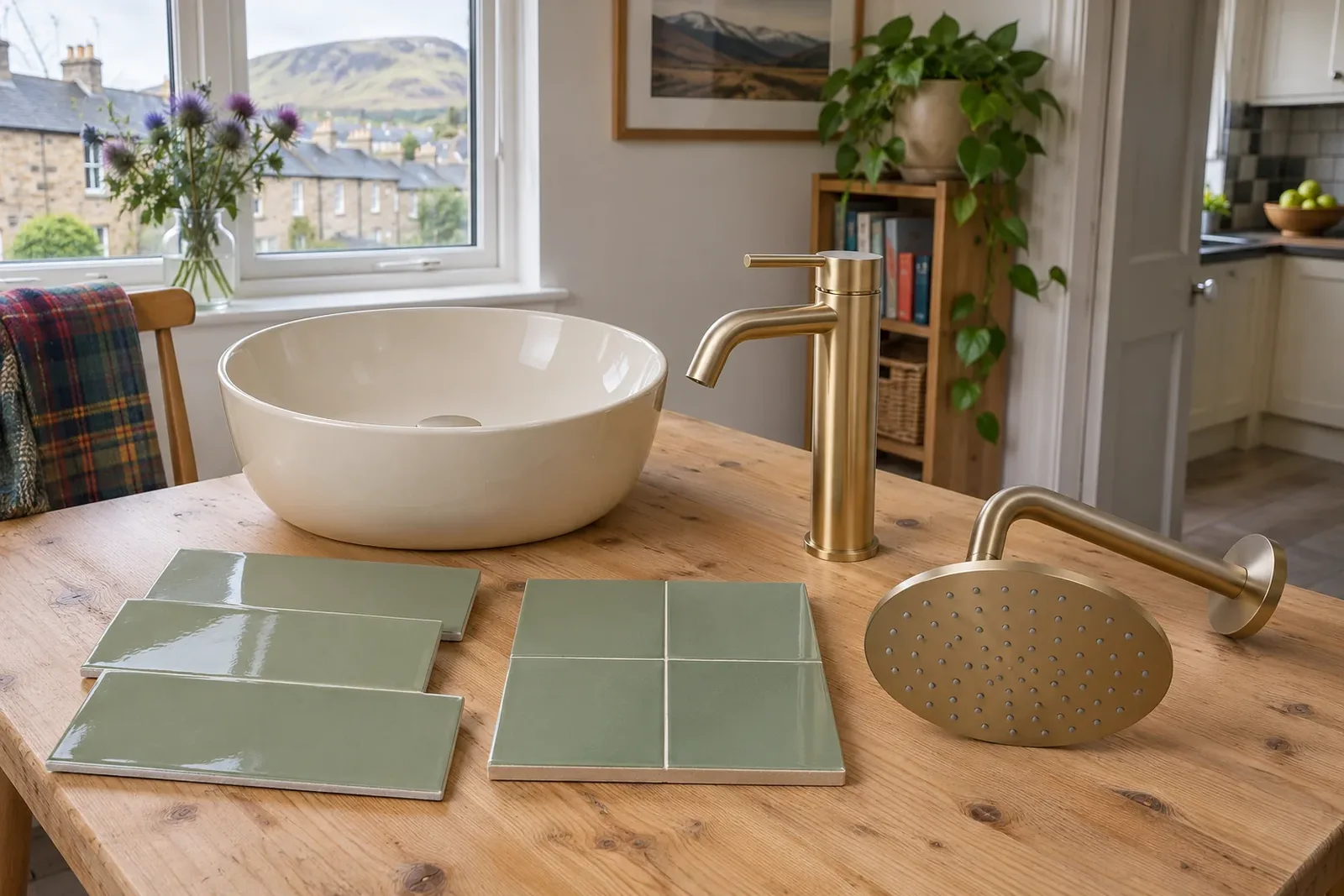
Pick the suite, the shower, the tiles or panels and the furniture before the first day, and have them delivered and checked. Opening a box on the day and finding a chipped basin or the wrong shower tray can cost you a week.
A sensible installer will ask you to settle the small things too: the height of the towel rail, where the shelf goes, whether the toilet is wall-hung. Those choices decide where pipes and fixings are placed behind the wall. If you are still deciding on the layout, choosing a bathroom suite and layout for a family home is a good place to start.
Days one and two: strip out and first fix
The old suite comes out first. Tiles are taken off, the bath is cut free, and the floor is lifted if it needs it. Expect noise, dust and a skip or a van outside. Seal the doors to the rest of the house with sheeting, and take your towels and toothbrush out of the room before the day begins.
Then comes the first fix. This is the hidden work: new pipes run to the right places, waste pipes are given the right fall, cables are routed, and boards are fitted where walls need strengthening for a shower, a cabinet or a wall-hung toilet. After this stage the room looks rougher than when you started, which is normal.
Water is usually off for a few hours on these days. Fill a kettle and a couple of bottles, and plan a morning shower elsewhere.
Walls, floors and waterproofing
Once the pipework is in, the walls are boarded and the shower area is made watertight. This is the step you will never see again, so it is the one to ask about. In a wet area the boards need sealing at every joint and corner, and the floor under a shower tray or a level-access former has to drain properly.
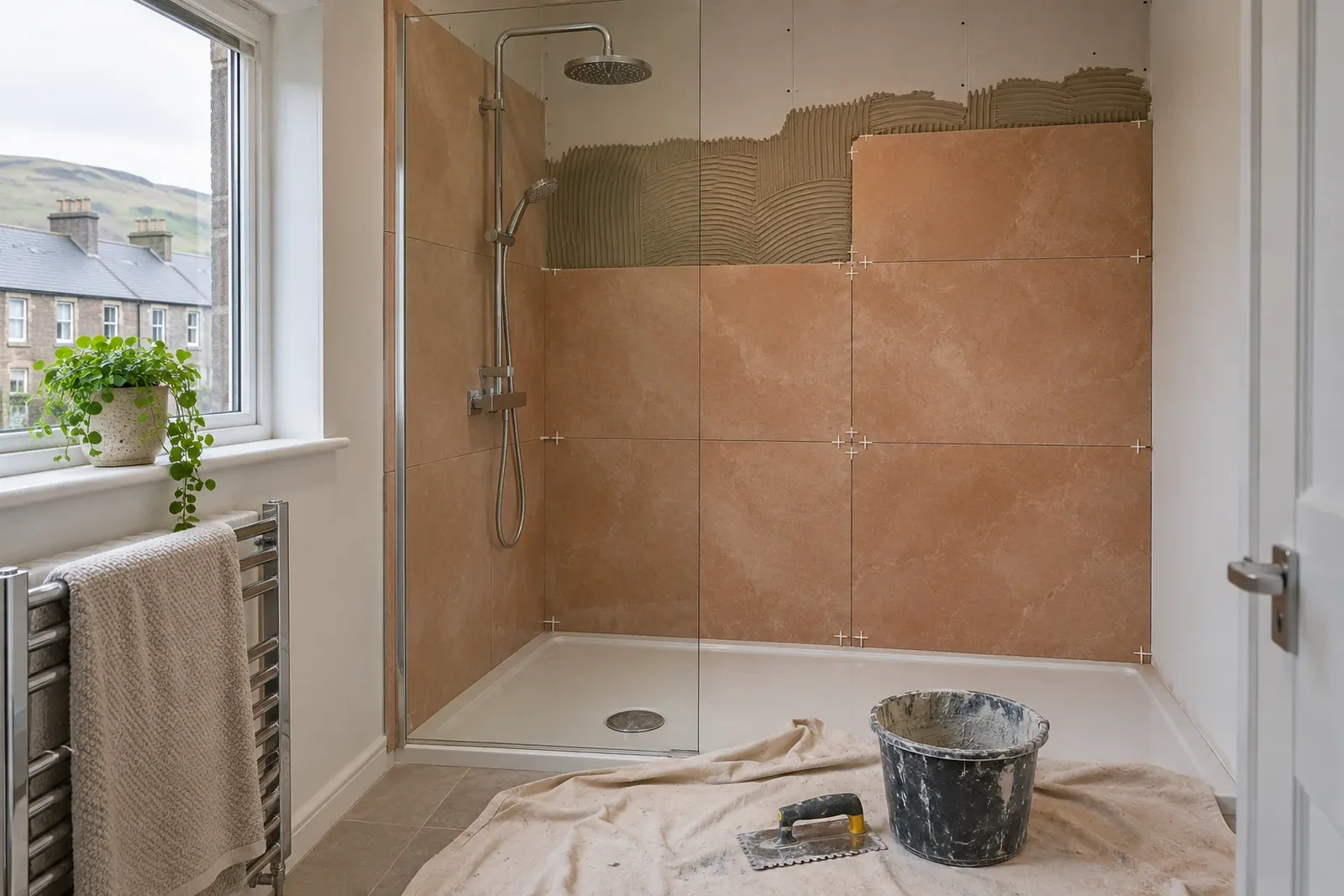
Then the finish goes on: tiles, or wet wall panels in the shower. Tiles need time to set and then grouting, so they stretch the job by a day or two. Panels go up faster. If you are weighing the two, we compare them in wet wall panels or tiles.
The floor covering goes down around now, whether that is vinyl, a tiled floor or a click flooring made for wet rooms.
Second fix: the suite goes in
The second fix is the satisfying part. The toilet, basin, taps, shower valve, radiator or towel rail, extractor fan and lights are all fitted and connected. Silicone goes round the bath, tray and basin edges, and it needs to cure before you use the shower, which is often a full day.
Electrical work in a bathroom has special rules about where fittings can go, so it is done by a qualified electrician and not squeezed in by whoever is holding a drill. Our guide on building standards, ventilation and electrics in a Scottish bathroom covers what to expect.
Snagging, sign-off and paperwork
Before the last payment, go round the room with the installer. Turn every tap and the shower on, flush the toilet, open the doors and drawers, and run the fan. Look at the grout lines and the silicone in daylight, and run your hand along the edges for rough spots. Anything you find now is easy to fix. A week later it becomes an argument.
Ask for the paperwork: guarantee papers for the products, the care instructions for the finishes, and any certificates for gas or electrical work that was done. Keep a spare tile or a little leftover grout and sealant if you can, because matching them later is hard.
We are happy to be asked all of this, and you should ask any installer the same questions.
What to do next
If you want a bathroom installation that follows these steps, see how our bathroom installation works or have a look at our modern bathrooms for ideas on the finished room. Living in Glasgow or the surrounding towns? Our Glasgow bathroom installation page shows how we work in your area.
Call now to tell us about your room, your plans and when you want it done. There is no pressure to book.
Common questions
Call nowHow many days does a bathroom installation usually run?
It depends on the size of the room, how much tiling there is, and what is found when the old suite comes out. A straightforward swap of the same layout is quicker than moving the toilet or adding a shower. Your installer should give you a start date and a likely finish in writing.
Can I stay in the house during a bathroom installation?
Most people do. Plan for the water being off at times, and check you have another toilet and a place to wash. If you live in a flat with one bathroom, ask about a temporary arrangement before the start date.
Do I need to be home every day?
You do not need to stand over the work, but be reachable. Small decisions come up, such as where a tile cut falls or where the shower valve sits, and a quick answer keeps the job moving.
What should I check at sign-off?
Run every tap and the shower, flush the toilet, check the fan, look at the silicone and grout in daylight, and ask for the guarantee papers before you pay the final amount.